The Pollinator Garden and Memorial Grove
Introduction
In September 2023, a fantastic project came to fruition with the official grand opening of the Pollinator Garden and Memorial Grove.
This area, since its inception in 2017, has been maintained by volunteers who have spent countless hours planting, weeding, watering and maintaining the plants and structures there.
At this peaceful spot you’ll find a Bugtel (Insect Hotel) with more than a dozen shelters for nesting and overwintering pollinators, a Pollinator Garden filled with pollen- and nectar-rich plants for hungry pollinators, a stunning pallet art collage of the 25+ plant species in the Pollinator Garden, an adorable Bee Photo Op Board with holes where people can place their faces to create a fun photo, and a Memorial Grove with 4 Serviceberries, 2 small gardens and a comfy bench from which to admire the plants, pollinators and other wildlife attracted to the area.
Read on to find out more!
Location
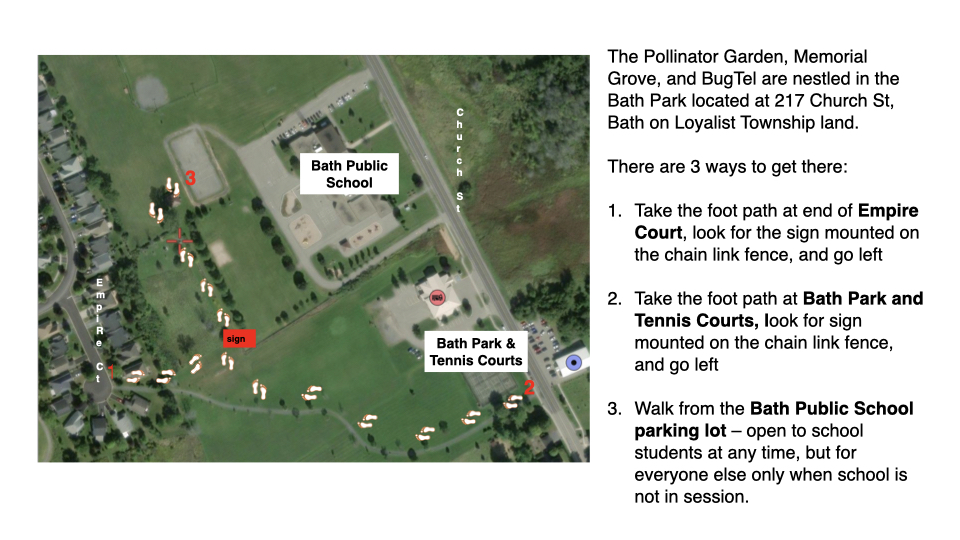
You’ll find the Pollinator Garden and Memorial Grove on Loyalist Township property in Bath, Ontario, but you’ll have to go looking for it as it’s tucked away in a quiet spot!
It’s accessible by walking one of two paths, starting out either from the Bath Pickle Ball and Tennis Courts on Church Street, or from the end of Empire Court. A sign mounted on the chain link fence behind the Bath Public School guides you to its location, just north of the pine tree grove.
Given that the site of the Memorial Grove and Pollinator Garden is behind the Bath Public School, the Club has extended an invitation to the school to utilize the area as an outdoor classroom, thereby enhancing the students’ experiential learning.
The Bugtel Insect Hotel
The idea for the area started back in 2017 when club members led by Wendy O’Neill were inspired to create a haven for insects, known simply as the “Insect Hotel”. Bumblebees and solitary bees and some butterflies are declining, so by providing homes for them we can contribute to their conservation.
The site chosen was on Loyalist Township property, behind the Bath Public School. It’s an ideal spot away from high-traffic areas that is also sheltered from the prevailing winds – which can be dangerous to small pollinators – by two large evergreens. One corner of the area is situated next to a wet, swampy area much appreciated by amphibians.
The main structure is made of discarded wood pallets donated by Kaitlin Group and Schell’s Market. Other natural materials provide “rooms” in the “hotel.” The Bugtel’s nesting and sheltering materials are situated on the south and east sides of the structure. This ensures the hotel receives maximum sunlight, which beneficial insects like bees need to warm up and develop their young.

When the structure was completed, students of the Bath Public School were invited to give it a name. The Grade One class of Mrs. Hay dubbed it “The Bath Bugtel”, the name by which it has been known ever since.
In the fall of 2017, most of the small holes drilled into wood for solitary bees were filled with larvae and plugged up with mud. This was a sure sign that the club’s efforts were paying off. As did winning the OHA Pollinator Haven Award that year!
In 2018 the club’s attention turned to providing food resources for the Bugtel’s inhabitants, surrounding it with native plants rich in nectar and pollen. The Pollinator Garden was born!
In 2023 Chris Thibeault fitted the Bugtel with a roof to protect its inhabitants from rain and excess moisture, which can degrade the materials and potentially harm the bugs.
In 2025 we refreshed the Bugtel contents with additional materials like broken plant pots, pinecones, and wood slices. We also added more insect sheltering and nesting options with a mason bee hotel and DIY projects like Ladybug Lodges, a Toad Abode, Bumblebee Hotels, a Bug Snug, Butterfly Puddler, and a sandy habitat for ground-nesting bees. You might want to try some of these in your own garden! Check out the DIY Insect Shelters section for more info.
What’s in our Bugtel?
Did you know that an average garden can hold about 2,000 species of insects? By providing the right habitat, we can greatly increase the numbers of beneficial insects in the garden. In this section you’ll learn about some of the habitats that we provide for them.
Since over 90% of bees lead solitary lives and 70% of those are ground-nesting, we’ve provided a sandy area where female digger and sweat bees can excavate nests and raise their young.
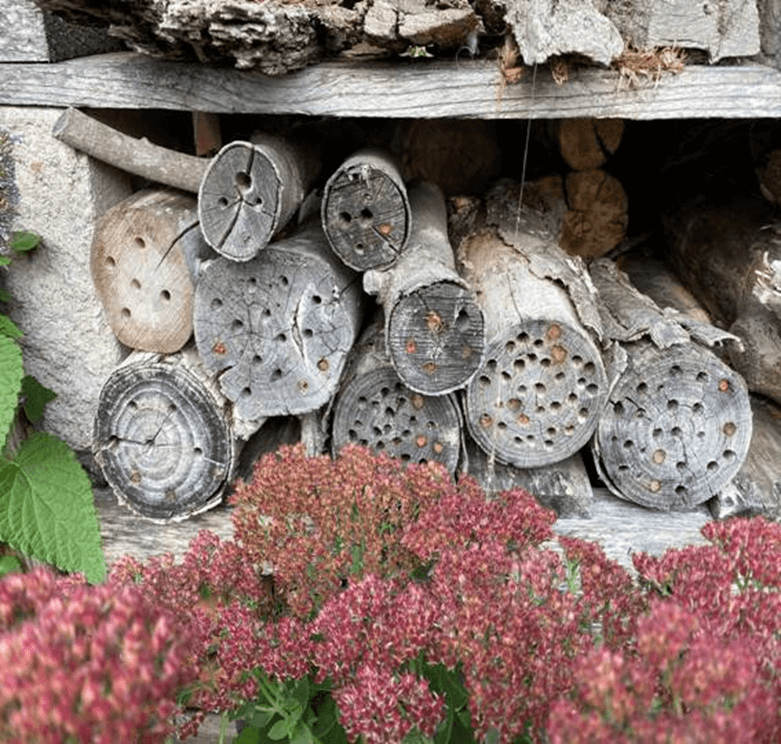
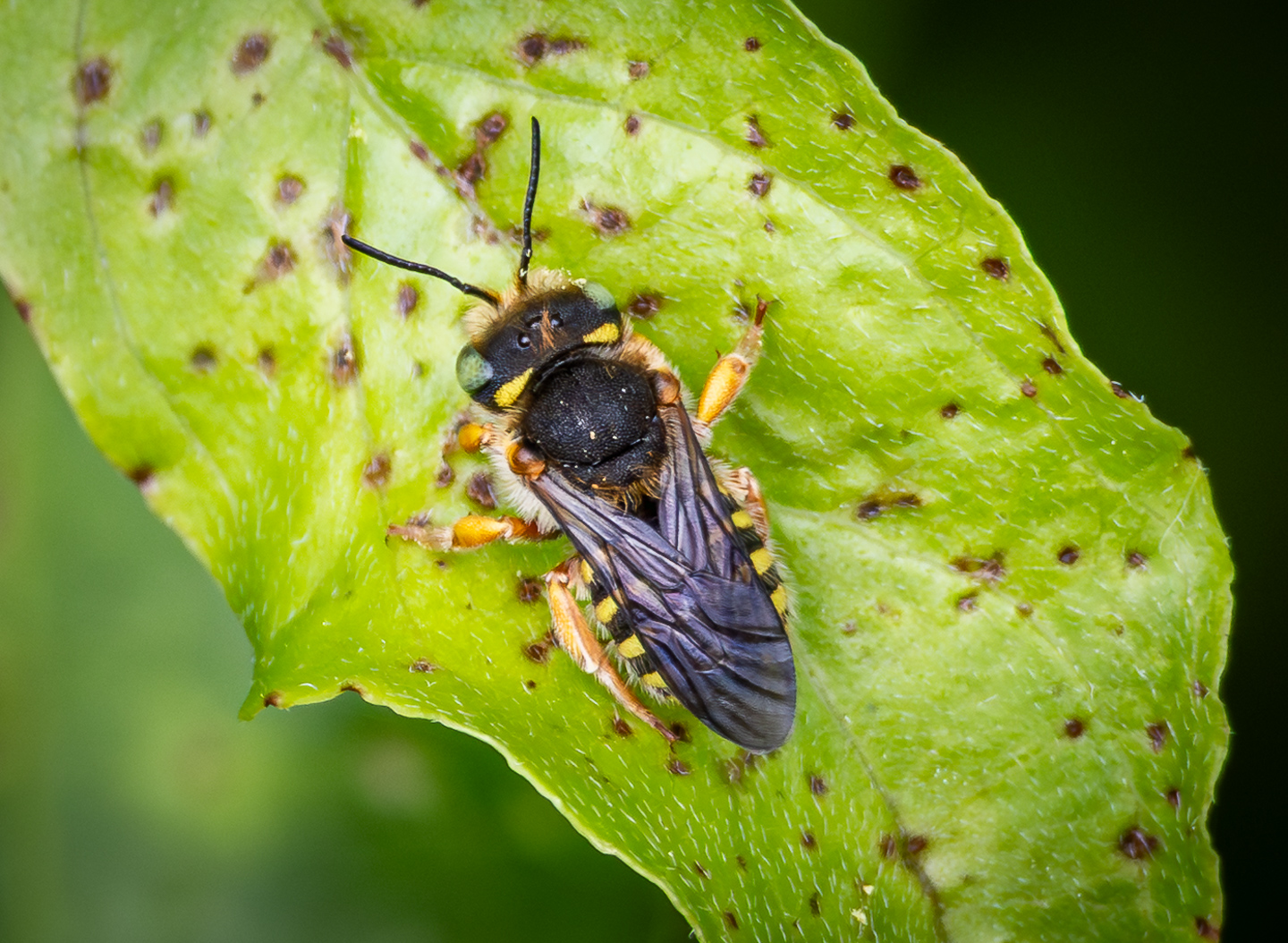
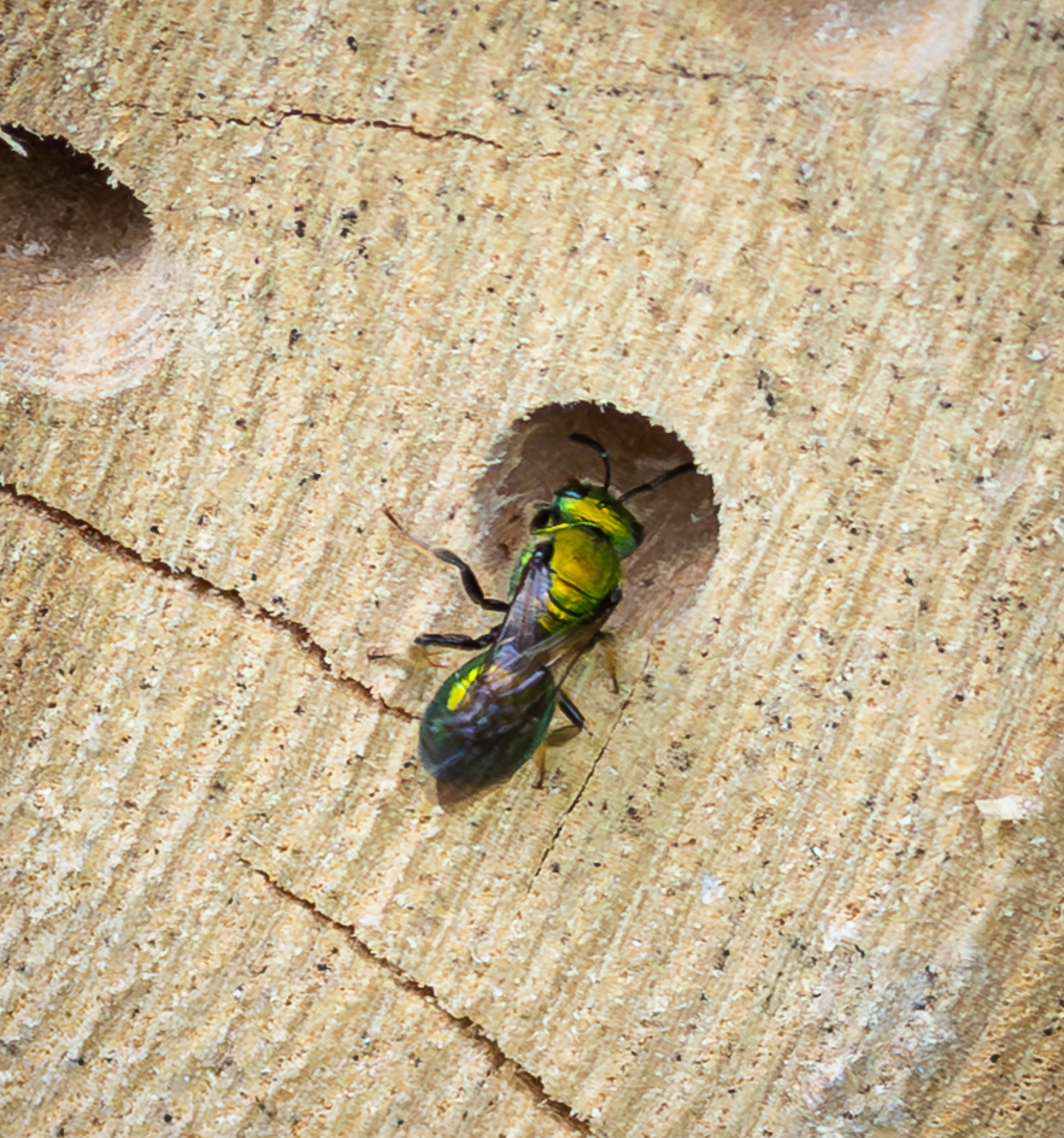
To help the other 30% of solitary bees who are cavity nesters, we’ve provided a parchment-lined mason bee house for mason bees and large pieces of wood drilled with various size holes for large carpenter bees. Meanwhile, in the PG we leave pity/hollow plant stems in place for nesting small carpenter bees. They lay their eggs in the stem or wood cavities, and then plug them with mud, pith, saliva or leaves to keep their developing larvae safe from predators and the elements.
We’ve provided a Bumblebee Hotel stuffed with kapok that resembles the cavities that queens often use for nesting, like abandoned rodent burrows. If she finds our hotel suitable, she’ll build a few waxen pots within the cavity, fill them with nectar and pollen, and then lay her eggs on top.
Bees and butterflies get thirsty after a day of foraging for nectar and pollen, so a Bee Waterer and Butterfly Puddler provide them with hydration and nutrients.
Frogs and toads, who eat slugs and other garden pests, need water, and therefore the Bugtel was built in a spot where water is available. We’ve also provided an in-ground Toad Abode to give them a place to rest and hide in, especially during the day or in the summer sun.
Dead wood is essential for wood-boring beetles, and it also supports many fungi. Crevices under the bark hold centipedes, woodlice, and other minibeasts.
Wood slices serve as shelter and breeding grounds for various insects, especially those that utilize or create holes in wood. They provide a variety of spaces for insects to nest, hibernate, and reproduce. Sometimes you’ll find miner bees nesting under the leaf litter.
Straw, hay, loose bark and dry leaves provide a frost-free space for centipedes, millipedes and spiders. These insects break down the material to compost, an essential part of a garden recycling system.
A “leaves the leaves” approach provides warmth and protection to hibernating wildlife during the winter months, like frogs, salamanders, and toads, as well as insects like butterflies, moths, and various types of caterpillars.
A Bug Snug is a pyramidal structure of 3 sticks lashed together that holds layers of hollow stems, dried out flower stems, twigs and cuttings resulting from garden maintenance. It’s a great way to transform garden detritus into an effective spot for pollinators and minibeasts to shelter and/or overwinter.
Since we won’t use pesticides in our PG, we rely on other wildlife to keep aphids, mites and other pests under control for us, a concept that’s also known as Integrated Pest Management (IPM). We make our PG and Bugtel a welcome place for these beneficial insects by providing pinecone Ladybug Lodges and Lacewing Homes made with pop bottles and corrugated cardboard.
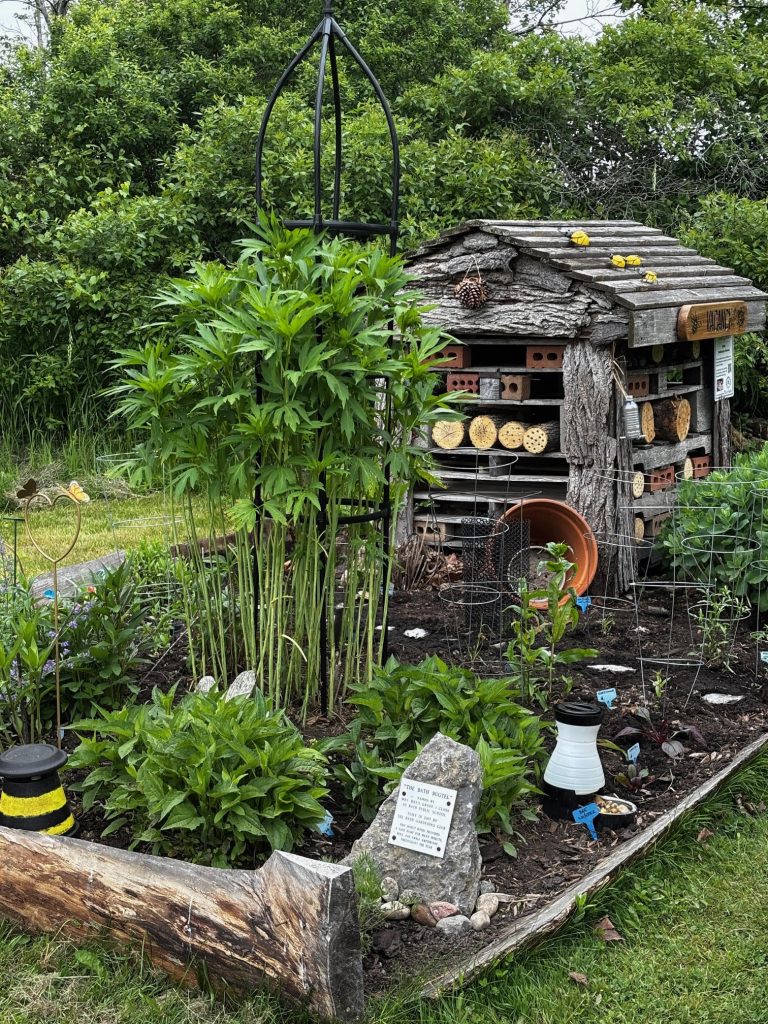
Photo by Kim Bonner
The Pollinator Garden (PG)
Introduction
In 2018 the Pollinator Garden was born when club members surrounded the Bugtel with a garden planted full of native plants rich in nectar and pollen.
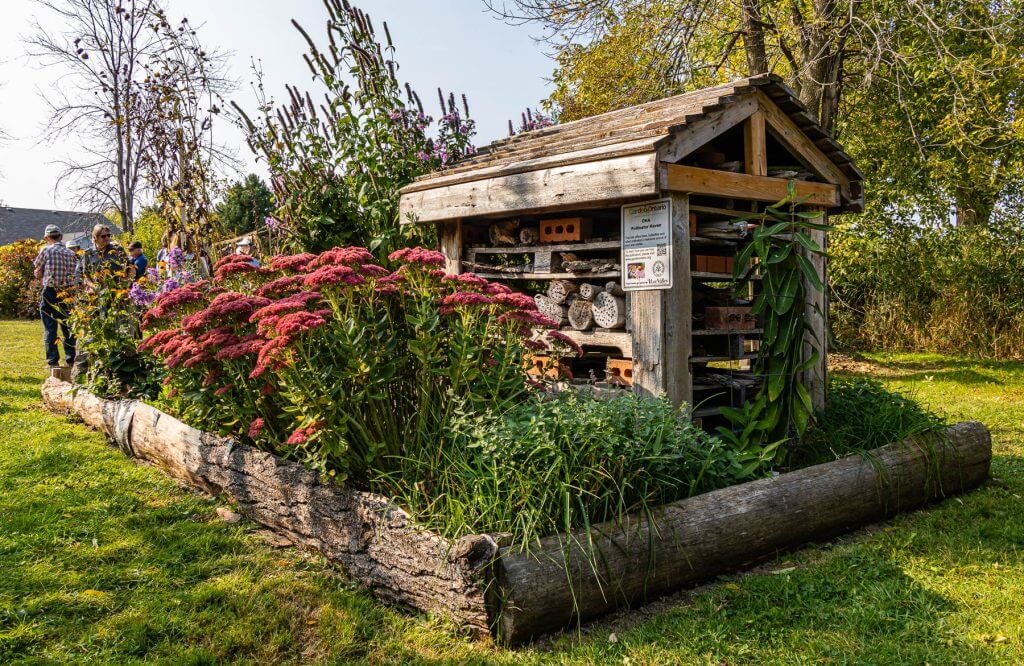
In 2023 using a generous donation from Lafarge Canada, club members led by Janice Firth expanded the Pollinator Garden, creating a veritable bullseye of colour, for attracting and sustaining even more local pollinators. Mike Whalen provided lumber for the sides of our raised pollinator garden. An illustration of all the flowering plants growing there was captured in a lovely pallet art collage painted by the late Bonnie Fredenburgh.
In 2024 the Pollinator Garden Guide was created by Kim Bonner to provide helpful information on how to care and feed the 25+ plants in our PG, while being careful to preserve pollinators’ nesting and overwintering habitats.
In 2025, we installed cloches to protect emerging plants from munching bunnies, added more diversity with Little Bluestem Grass and False Indigo, installed an obelisk to support towering False Sunflower stalks, continued our efforts to eradicate invasive marsh woundwort, made sure we had 3 of each plant variety, and added some garden art to appeal to the kiddos.
In spring 2025, our club applied for Wildlife-Friendly Habitat Certification with the Canadian Wildlife Federation (CWF) and were accepted because our PG and MG provide food, water, and shelter to wildlife, while using gardening practices that are earth-friendly and sustainable. Getting CWF certification is a great way to show the collective impact of what Canadians are doing to help wildlife thrive and to inspire others to do the same. For more information about what it involves, visit https://cwf-fcf.org/en/explore/gardening-for-wildlife/action/get-certified/ Maybe your home garden qualifies?!
In summer 2025, we registered our PG with the DSF Butterflyway Project, a citizen-led movement growing highways of habitat for bees and butterflies in residential yards, school and corporate grounds, boulevards, and parks across Canada. Between 2017 and 2014, over 7,400 habitat gardens have been registered! To qualify, a garden needs a mix of native wildflowers, grasses, shrubs, and/or trees that bloom throughout the growing season, allowing pollinators to find the nectar and pollen they need, as well as host plants for egg-laying. For more information, and to see our PG on the map, check out the Butterflyway Project website here: https://davidsuzuki.org/take-action/act-locally/butterflyway/
In fall 2025, we received Monarch Waystation Certification with Monarch Watch, a North American organization that encourages home gardeners, schools, and businesses to offset the loss of milkweeds and nectar sources by creating, conserving, and protecting monarch butterfly habitats. With common, swamp and butterfly milkweeds in our PG to feed hungry monarch caterpillars, and lots of native plants to provide food sources to adult butterflies before their long trek to Mexico, we easily met the requirements. To learn more, check out the Monarch Watch website here: https://www.monarchwatch.org/waystations/
What is a Pollinator?
Plants are pollinated by pollinators collecting nectar and pollen, with pollen from the male part (anther) of a flower sticking to their bodies and then being transferred to the female part (stigma) of another flower as they move from bloom to bloom. This process is vital for a diverse range of reasons, including food security, biodiversity, and the overall health of ecosystems.
Ontario’s pollinators include bees (both wild bees and managed honeybees), butterflies, moths, wasps, flies, beetles, and hummingbirds.
Here are some interesting facts about the pollinators you might spot in our club’s Pollinator Garden.
- Canada has over 800 species of bees, about half of which live in Ontario. Bees collect pollen using a combination of their fuzzy bodies, specialized brushes on their legs, and pollen baskets.
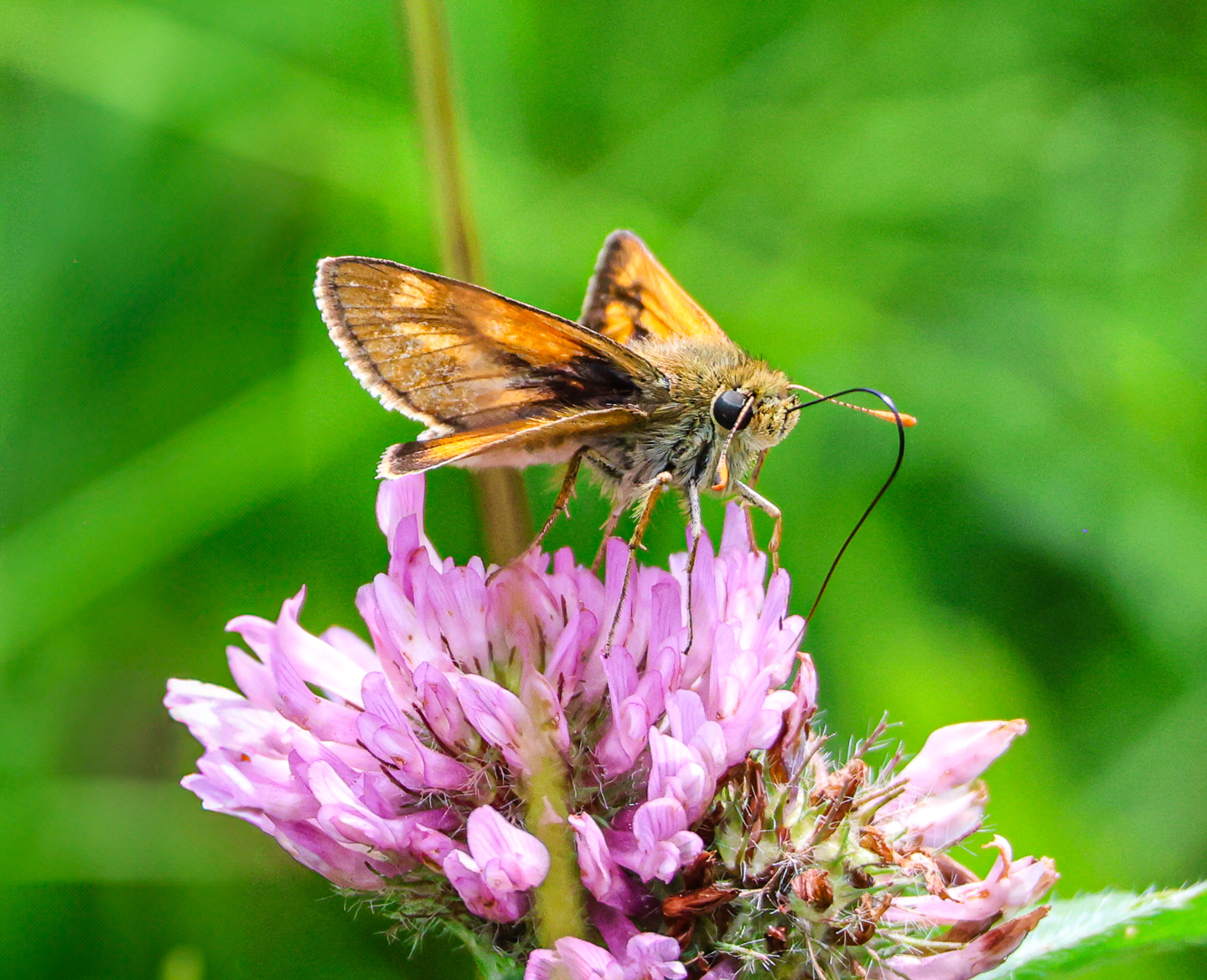
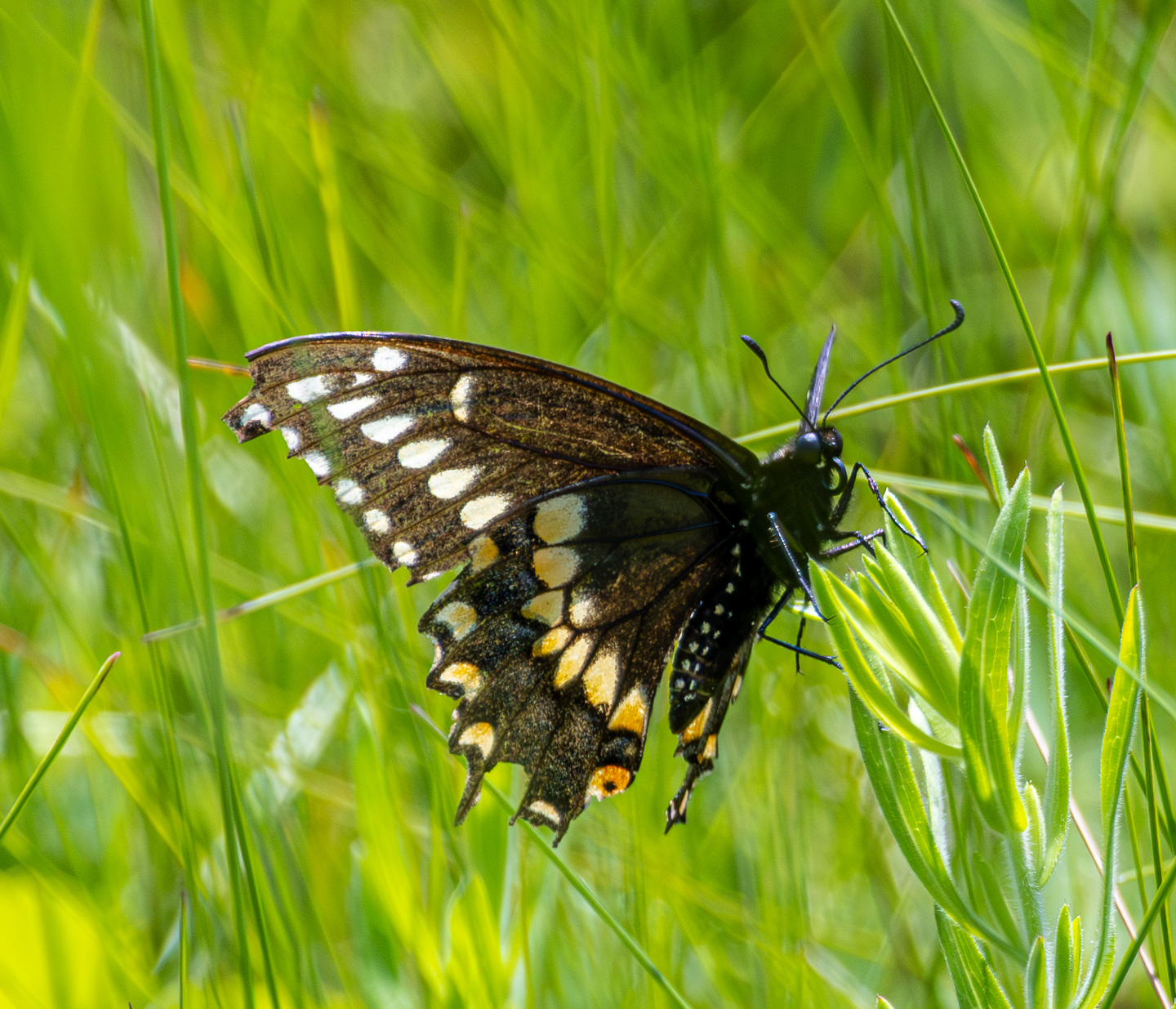
- There over 100 butterfly species in Ontario, some of the most common being Monarchs, Swallowtails, Painted Lady, Viceroy, Eastern tailed-blue and Skippers. They collect pollen on their legs, proboscis, or bodies while feeding and then transfer it to the next flower.
- There are over 3,300 moth species in Ontario. Some of the most common are Luna Moth, Hickory Tussock Moth, Blinded Sphinx and Pale Beauty. Their bodies, especially their furry legs and bodies, can become coated with pollen as they visit flowers.
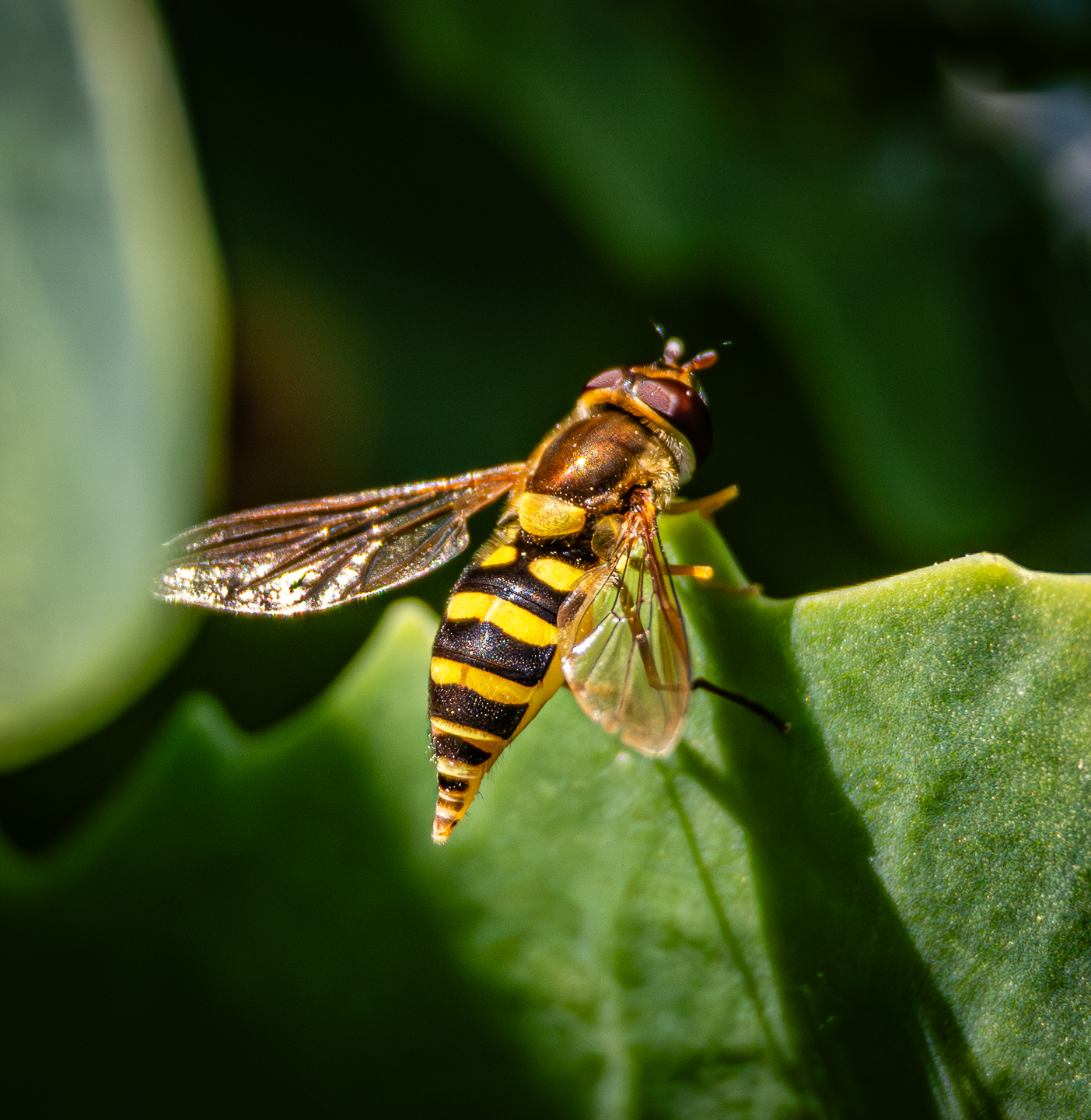
- Hoverflies look like bees but are smaller, have only one set of wings, and compound eyes like other fly species. They are excellent flyers, able to hover and even fly backwards. Their hairy bodies collect pollen, which then gets transferred to other flowers when they visit them.
- The Ruby-Throated Hummingbird is the most common one seen in Eastern Ontario. When reaching into tubular flowers with their long beaks and tongues, pollen can get stuck on their beaks and feathers. As they move to the next flower they unintentionally brush against the stigma, transferring the pollen.
- Several types of beetles are known to feed extensively on pollen and move between different flowers, such as soldier beetles, scarabs, long horned beetles, and sap beetles. Pollen grains stick to their bodies as they move from flower to flower.
What is a Pollinator Garden?
A Pollinator Garden (PG) is a collection of native and non-native plants that are beneficial to pollinators by providing pollen and nectar, hosting larvae and/or supplying nesting and overwintering sites. The plant selection in a pollinator garden is designed to attract a wide range of pollinators by incorporating different heights, colours and enticing scents, as well as providing an uninterrupted parade of blooms throughout the growing season.
Pollinators co-evolved with native plants, meaning they’ve adapted to each over time. For example, some flowers have evolved long, tubular shapes to attract pollinators with long tongues, like hummingbirds, while other plants have evolved to be pollinated by specific bee species. Plants may also produce a variety of chemical to attract pollinators to them.
Did you know that we have over 25 plant species in our club’s pollinator garden? Check them out in our Pollinator Garden Guide. In the guide you’ll find information about the plants that are housed there and how to care for them, while preserving pollinators’ nesting and overwintering habitats.
If you’re interested in creating a pollinator patch in your garden, you can accomplish it with much less than 25 species though! If you plant three each of three species of native plants that bloom during each of the three growing seasons (spring, summer, and fall), you’ll ensure a continuous supply of food and shelter for pollinators throughout the year, also known as the 3x3x3 pollinator garden method.

Just north of the garden you’ll find a lovely pallet art collage painted by the late Bonnie Fredenburgh that depicts the flowering plants growing in our PG. The numbers on the board correspond to the flower numbering in the Pollinator Garden Guide mentioned above. In 2025 the collage was beautifully restored by BGC member Donna Mills.
Are you curious about what types of flowers various types of pollinators like? Here’s an overview of their innate preferences. Note that this is just a general guideline. A pollinator may learn to associate other colours with the reward of nectar and so will be drawn to these colours as well.
- Bees are drawn to fragrant flowers in blue, purple, violet, and yellow shades. They prefer flowers that are bowl-shaped or tubular. They’re unable to detect the colour red!
- Butterflies prefer bright colours like red, yellow, orange, pink, purple, and white. They’re drawn to tubular and flat-clustered flowers. While unable to detect scent, they can taste with their feet!
- Hoverflies visit white, cream or yellow flowers. They’re known for their amazing flight skills while gathering nectar and pollen. They’re able to hover and even fly upside down!
- Beetles enjoy scented flowers, particularly ones that are white or pale green and are bowl-shaped. They’re the world’s first pollinators, having evolved before bees and butterflies!
- Hummingbirds are attracted to warm colours like red, orange, and pink. They prefer tubular-shaped flowers, which they can reach with their long tongues. They consume double their weight in nectar and insects every day!
- Moths are attracted to light-coloured flowers that are visible at dark. They use their proboscis to seek out flowers with strong, sweet scents.
Invasive Plants
Marsh woundwort
While bees flock to this plant for food and pollen, Marsh Woundwort is a non-native and highly invasive plant that outcompetes and kills off other beneficial plants in our Pollinator Garden.
Marsh Woundwort spreads through seeds and underground runners, allowing it to quickly colonize small areas.

If you see it growing in the PG, kindly remove it and any underground runners you find attached to it. It’s best to throw this plant in the garbage, rather than composting it, since it may be able to survive the composting process, leading to regrowth if the compost is used in gardens. Photo by Kim Bonner
Pollinator Garden Maintenance
The garden is maintained by our Habitat Helpers volunteers on a rotating schedule throughout the growing season. They keep the plants watered, and the area clear of weeds and invasive plants. They also keep the fast-growing plants in check, so they don’t crowd out the delicate plants like Old Man’s Whiskers and Eastern Pasque Flower.
Dave and Adam Bryant do a great job of keeping our water supply flowing by filling up the on-site barrel whenever it gets low. They also pitch in with other maintenance work to keep the area looking tidy.
While everyone strives to have a lovely garden, it’s important to note that the PG is a pollinator habitat first and a garden second, so garden maintenance activities are aligned with that philosophy. Here are some of the basic principles:
- To avoid disturbing overwintering pollinators, delay spring maintenance activities until temperatures are consistently around 15C. Do as little as possible as late as possible.
- Save the stems to provide cozy cavities for stem-nesting bees, leave the hollow/pithy plant stalks in place
- To provide shelter and food for insects, pollinators, and other wildlife over the harsh winter months, adopt the “leave the leaves” approach
- Avoid toxic herbicides, pesticides or fungicides
- When plant material needs to be replaced, only select “neonic-free” specimens
- Avoid mulch since it prevents solitary ground-nesting bees from making nests.
- Use a Bug Snug to repurpose garden detritus into a haven for pollinators and amphibians who are sheltering or hibernating.
For more information refer to the Pollinator Garden Guide, which describes each plant in the PG along with instructions for maintaining plant health and preserving pollinators’ habitat. In Appendix B you’ll find a handy schedule of maintenance activities, organized by season.
For more information on how to “Save the Stems” refer to this brochure created by the Xerces Society that explains the nesting cycle for solitary stem-nesting bees and how to protect them (and their nests) year-round.
Fun Kid-Friendly Activities
“Be a Bee” Photo Stand-in Board
Whether you’re tall or whether you’re small you’ll find a spot in the Photo Stand-in Board to insert your face and take your picture as a busy bee going about its business in the garden. It’s a great way to capture your visit to the PG, MG and Bugtel!
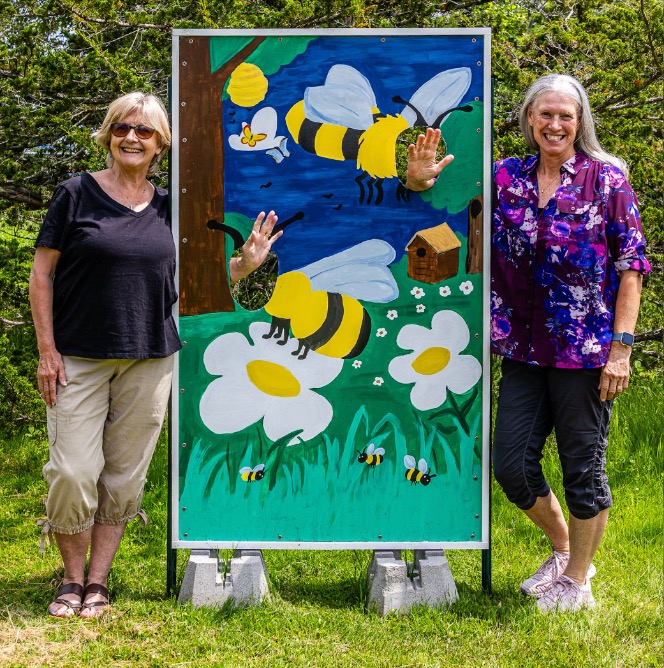
at the Photo Stand-in Board in 2025.
Photo by Don Taylor
DIY Insect Shelters
Many of the items in our Bugtel are easy DIY projects that require just a few materials. Building these shelters is a great way to encourage kids to investigate their own back yard, looking for different plants, insects, and other signs of life. Check these out!
Toby and Roo – How to Build a Bug Hotel
Natural History Museum – How to Make a Ladybird Lodge
How to build a pine cone ladybird hotel
Gardeners’ World – How to Make a Lacewing Home
Gardeners’ World – How to Make a Bumblebee Nest
Gardenista – The Bug Snug
Hearth & Vine – How to Make a Butterfly Puddler
Buddha Bee Apiary – How to create a safe bee watering station
PTES – How to Make a Habitat for Ground-Nesting Bees
Wild About Gardens – How to make a Hoverfly Lagoon
Scavenger Hunt
Come look for bees, butterflies, and other pollinators in our Pollinator Garden and Bugtel!
Grab the Scavenger Hunt Checklist tucked into the Bugtel structure, on the side facing the school, and search away! Please return the checklist to its spot when you’re done so others can enjoy it as well.
You just never know what you’ll see on any given day. It really depends on the weather, the time of day, the time of year, and what’s currently blooming in the Pollinator Garden. Prepare to be surprised!
Here are some things you might see:
- A cavity-nesting bee flying in and out of the drilled logs where it deposits its eggs with food (a bit of pollen)
- A thirsty butterfly touching down for a drink on the ‘butterfly puddler’
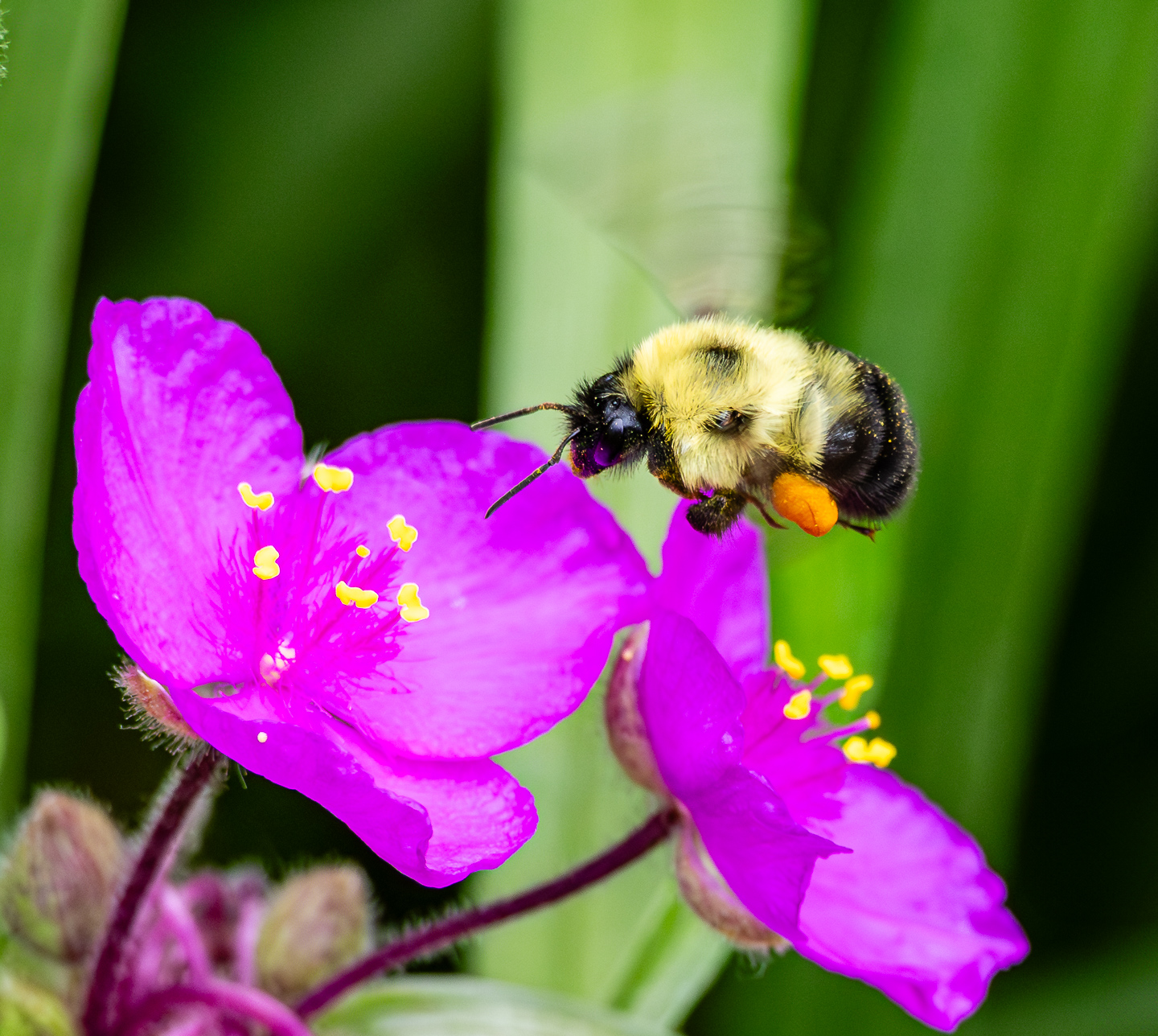
- A bumblebee diving into a flower for some tasty nectar
- A Monarch caterpillar hiding under the leaf of a milkweed plant
- A butterfly chrysalis in a sheltered location away from sunlight, while the caterpillar inside quietly transforms itself into a butterfly or moth
- A toad or a frog sheltering in the ‘Toad Abode’
- A beetle in the ‘stumpery’
- A ground-nesting bee disappearing into the ‘Sand-Nesting Habitat’
- A bee having a sip of water on a hot sunny day at the ‘Bee Waterer’
- Plugged-up holes in the drilled logs where bees have sealed them off to protect their offspring from rain, predators and parasites
Pollinator Crafts
Looking for something to do with the kids on a rainy or snowy day? Try some of these quick and easy projects, which provide a fun and engaging way to learn about pollination, and the importance of protecting our pollinators.
Krokotak – 3D Insects
Downeast Thunder Farm – Felt Monarch Butterfly
Make Time Together – Secret Message Flowers
Red Ted Art – Bug Fortune Teller
One Little Project – How to Make Pipe Cleaner Butterfly Rings
One Little Project – How to Make Pipe Cleaner Flower Rings
Kids Gardening – Garden Finger Puppets
Origami n’ Stuff 4 Kids – Easy Origami Butterfly
For Budding Naturalists and Photographers
Do you love nature? Do you love to take pictures? Are you an expert at spotting pollinators and minibeasts? If yes, we’d love to have your help photographing visitors to our Pollinator Garden and Bugtel.
See the Annual Bioblitz and BGC Bugtel Survey section for more information.
The Memorial Grove (MG)
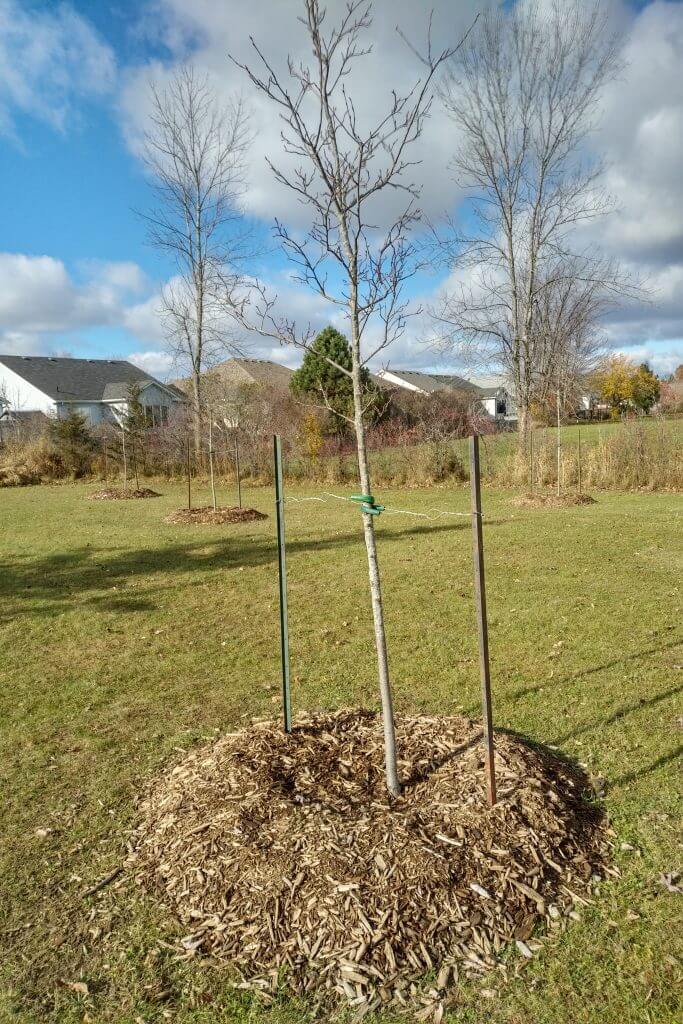
Using a generous donation from LaFarge Canada, our club created the Memorial Grove in 2023. It began with the purchase of 4 Serviceberry saplings, which are valuable for pollinators because they bloom early in spring, providing nectar and pollen for bees, butterflies, and other insects when food sources are scarce. They’re also perfectly situated for pollinators – like orchard bees – to visit them after emerging from the Bugtel shelters in spring.
The Township planted the serviceberries on our behalf, and installed a park bench, a relaxing spot from which to admire the plants, pollinators and other wildlife attracted to the Pollinator Garden. Township crews regularly visit over to the growing season to keep the area mowed and tidy.
Rob’s Creative Craftings provided the lovely wooden signage that was unveiled at the Grove during the opening ceremony in the summer of 2023. It reads “LaFarge Memorial Grove and Pollinator Garden”.
Since day one, care and feeding of the serviceberries have been skillfully provided by the father and son team of Dave and Adam Bryant. Their frequent watering, and mulching to protect from harsh weather conditions, are helping the delicate saplings to grow and thrive.
In 2025 we added some colourful blossoms to the Memorial Grove, with pollinator-friendly gardens on either side of the bench. We also added a nyjer bird feeder to attract granivorous birds (seed eaters) like finches, sparrows, and juncos that won’t prey on our precious pollinators.
Come sit and relax on the bench for a while and you may see or hear some of the local birds that have dropped by the Memorial Grove this past summer: Bobolink, Red-Winged Blackbird, Eastern Bluebird, Black-Capped Chickadee, Brown-Headed Cowbird, American Crow, Mourning Dove, Least Flycatcher, Canada Goose, American Goldfinch, Common Grackle, American Herring Gull, Great Blue Heron, Ruby-Throated Hummingbird, Blue Jay, Dark-Eyed Junco, Eastern Kingbird, Common Loon, Eastern Meadowlark, Merlin, White- and Red-Breasted Nuthatches, Eastern Phoebe, American Robin, Chipping and Field and House and White-Throated Sparrows, European Starling, Barn Swallow, Wild Turkey, Yellow-Rumped Warbler, Cedar Waxwing, and House Wren.
Eventually BGC members who pass away will be memorialized in this area with small plaques.

Thanks to a generous donation from LaFarge Canada, we were able to acquire native Serviceberry saplings that were planted by Loyalist Township personnel.
The Township also provided a park bench for the Grove.
What We’re Doing to Help
Getting the Word Out
We’ll be applying for our Pollinator Garden to be recognized on the DSF’s David Suzuki Foundation’s Butterflyway Map, which recognize citizens and organizations growing highways of habitats for bees and butterflies across Canada.
Annual Bioblitz and BGC Bugtel Survey
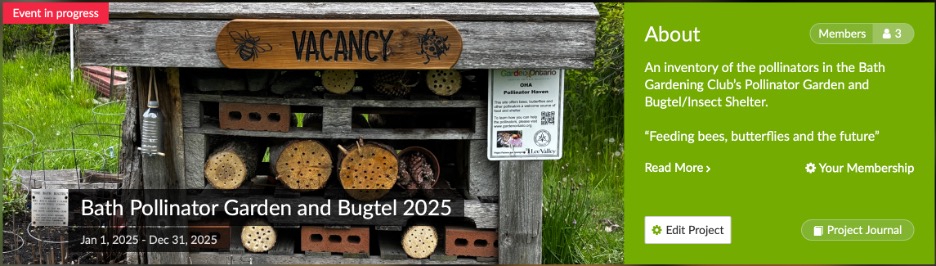
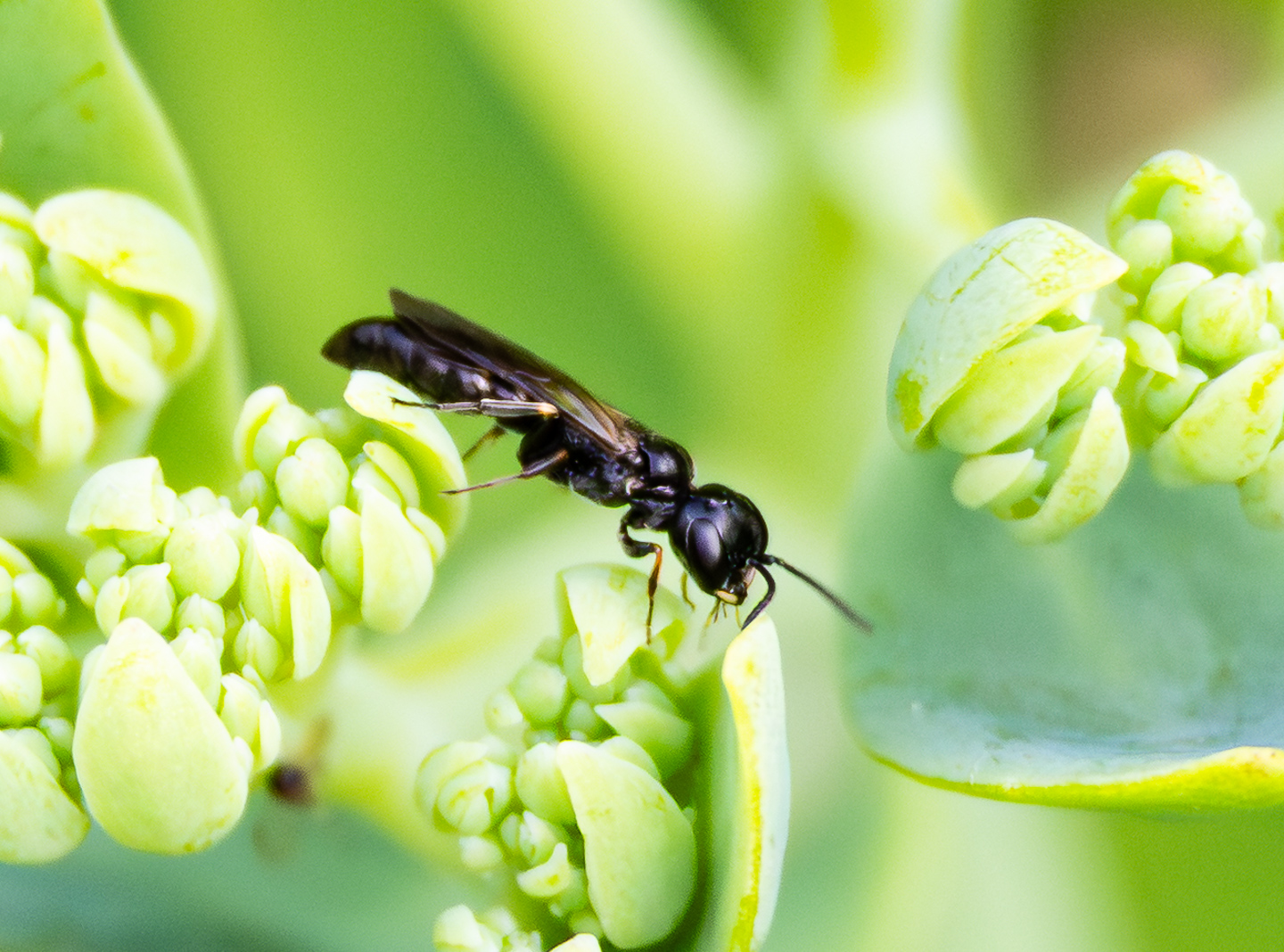
During Pollinator Week 2025 we participated in a community science project called Bioblitz for the first time. It’s an initiative managed by the Pollinator Partnership since 2008 with the goal of collecting and sharing data used for research purposes.
Our photos and observations contributed valuable data for scientific research and conservation efforts[1], but also gave us an opportunity to learn what kinds of pollinators and minibeasts were checking into our very own Bugtel. Since we’d never taken an inventory before, we had no idea which pollinators would come to visit, if any! Would they be attracted to the 25+ native plant varieties in the Pollinator Garden and leave with their bellies full of nectar and their furry bodies laden with pollen? Yes indeed! We’ve inventoried 35 species so far. We’ll continue to search out and identify more pollinators over the summer months as various flowers come into bloom at our Pollinator Garden.
[1] More than 6,500 observations in iNaturalist have been used in scientific papers.
If you’d like to contribute photos, please reach out to us with your iNaturalist ID at info@bathgardeningclub.ca and we’ll get you up and running!
For tips and techniques, check out INSECTS AROUND YOU , a beginner’s guide to insect watching from the iNaturalist organization, or this BUMBLEBEEWATCH.ORG PHOTOGRAPHY GUIDE from Wildlife Preservation Canada.
To see all our pictures and observations, please visit our project at this link on iNaturalist: https://www.inaturalist.org/projects/bath-pollinator-garden-and-bugtel-2025
To see detailed notes about what we saw, check out the 2025 Bioblitz document.
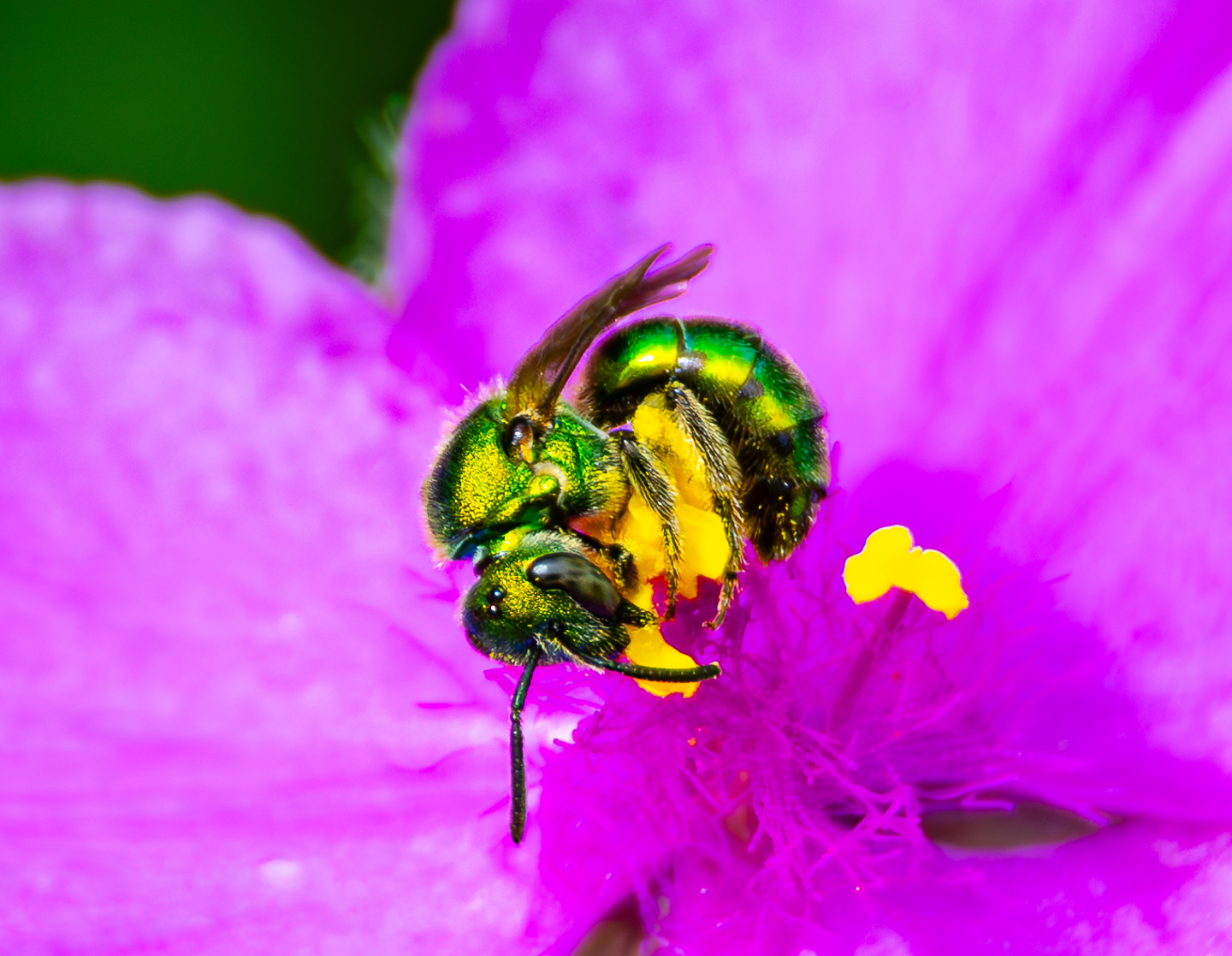
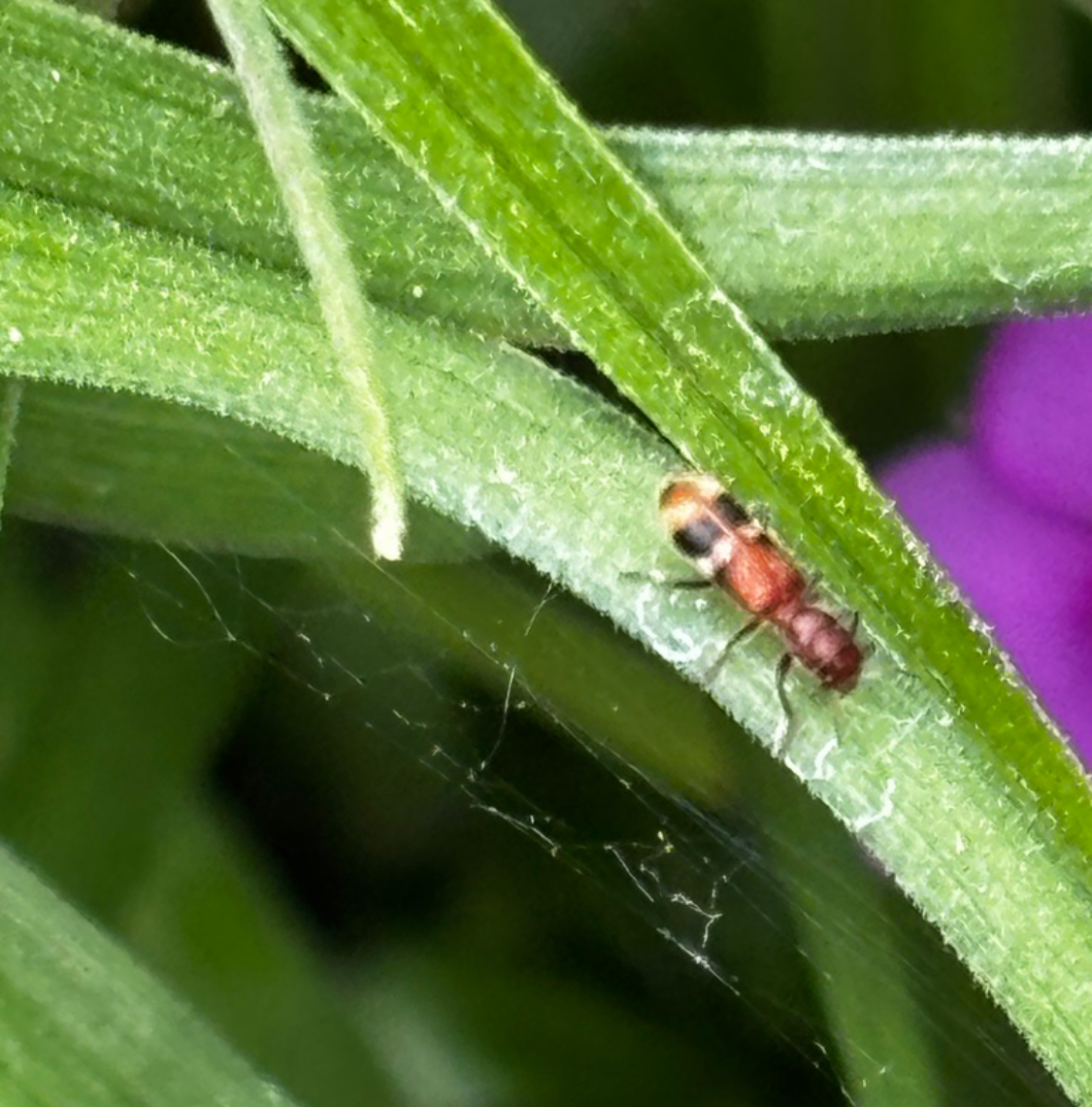
Helping Bumblebees at Risk
Some species of bumblebees, like the rusty-patched, yellow-banded and American bumblebees, have seen significant declines in abundance and distribution in Ontario.


Here’s what we’re doing to help bumblebee species.
- When the bumblebee queen emerges in late March or early April, she’ll be looking for early blooming flowers – like the Prairie Smoke and Pasque Flower in the PG – to build up her strength after a long cold winter.
- Her next task is to find a dry underground spot for her colony. Maybe she’ll use the sandy spot we carved out for ground-nesting bees?
- Her thoughts turn to creating this year’s offspring, and so she goes in search of nectar and pollen that she can place under the clutch of eggs she’ll lay in early May. She might find the Serviceberries’ blooms in our Memorial Grove are at their peak right about now.
- When the offspring emerge, they’ll be looking for pollen and nectar provided by flowers in various shades of purple, blue and yellow, of which there are several in our PG. They’re not picky about specific plants the way that “specialized” bees are
- When the heat of summer is in full swing the queen may be looking for hydration. Maybe she’ll stop at our Bee Waterer to quench her thirst. It’s a shallow dish of water with some rocks and pebbles for her to land on.
- In early fall she’ll be building up fat stores for the coming winter by visiting late-blooming flowers like Anise Hyssop and Goldenrod in our PG.
- As fall progresses, and this year’s offspring have died off, this year’s generation of queen bees will be looking for a place to shelter over the winter. Perhaps they’ll use the Bumblebee Hotel we’ve provided, will seek shelter at the base of the Little Bluestem Grass, or perhaps will burrow underneath the leaves we’ve left behind for overwintering pollinators.
Helping Monarch Butterflies at Risk
In Ontario, several butterfly species are at risk, including the endangered Mottled Dusky Wing and “special concern” species like the Monarch Butterfly and West Viriginia White.
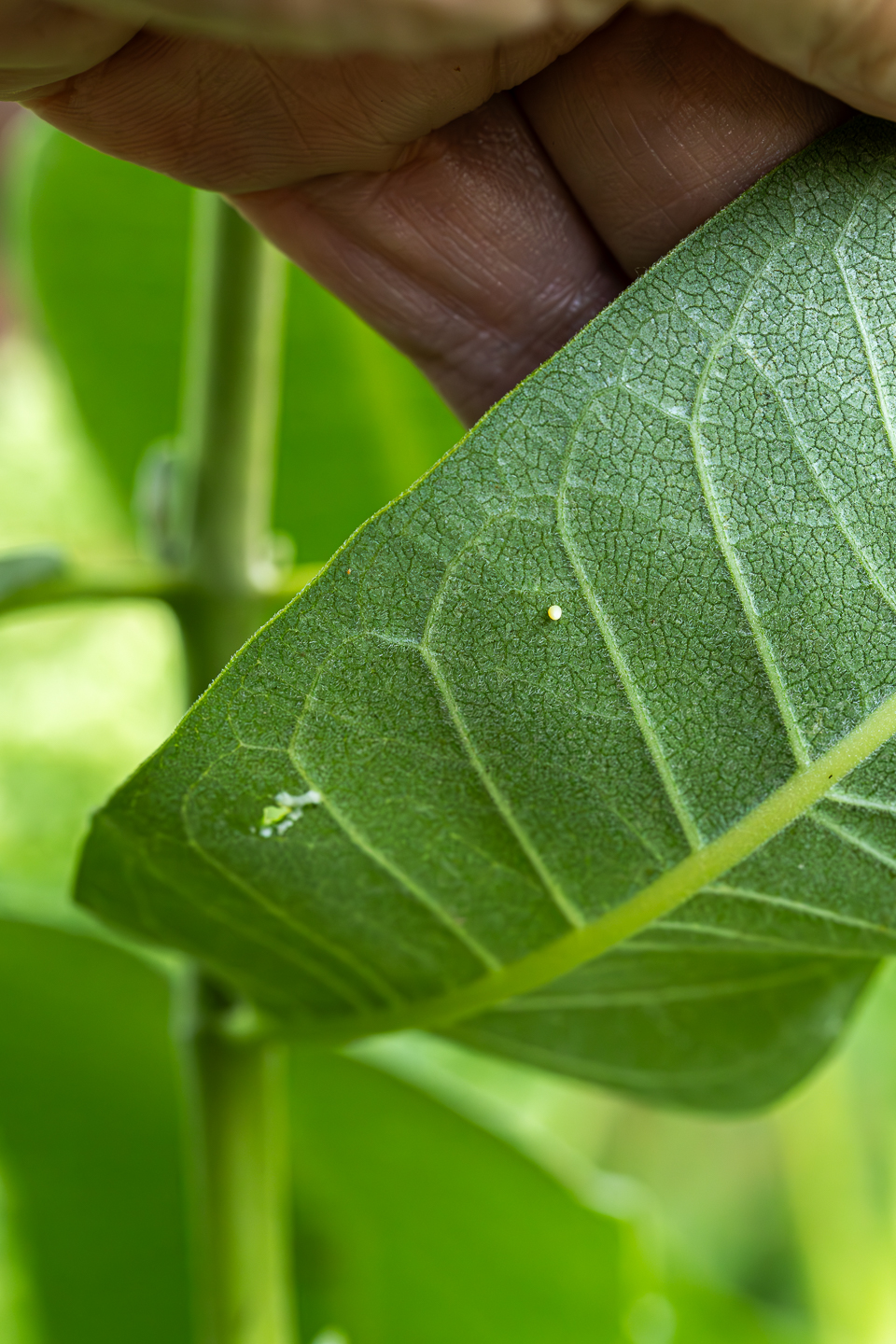
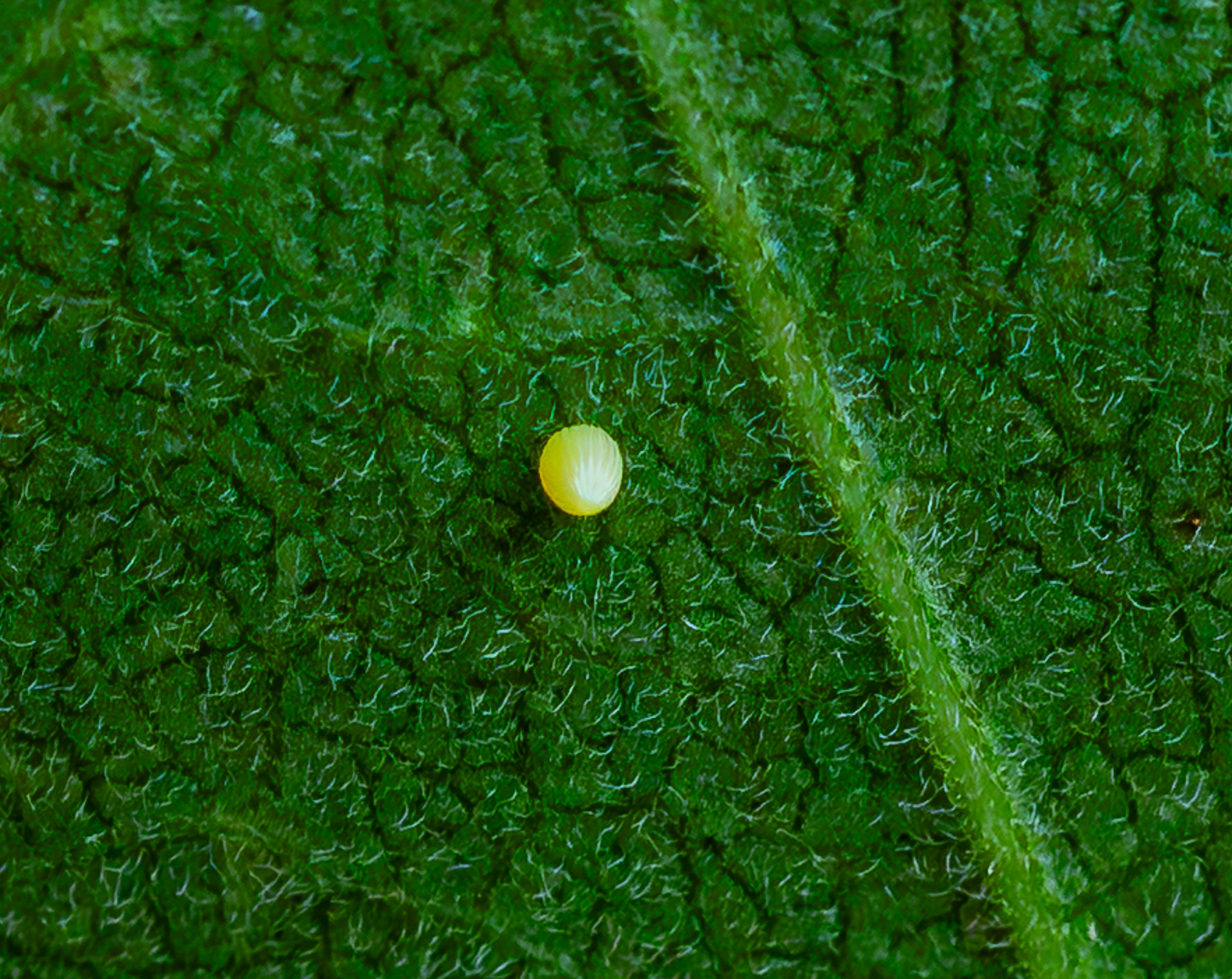
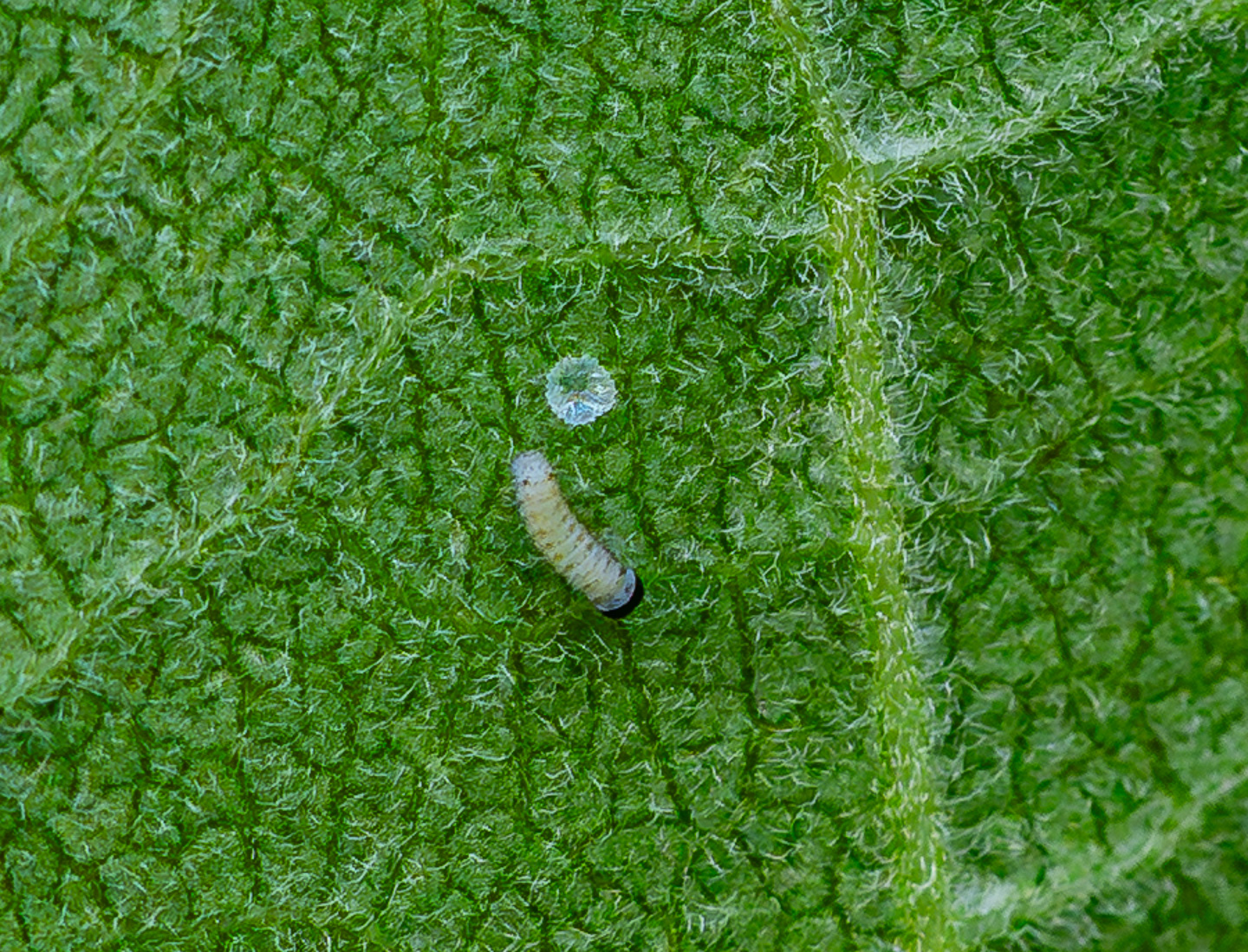
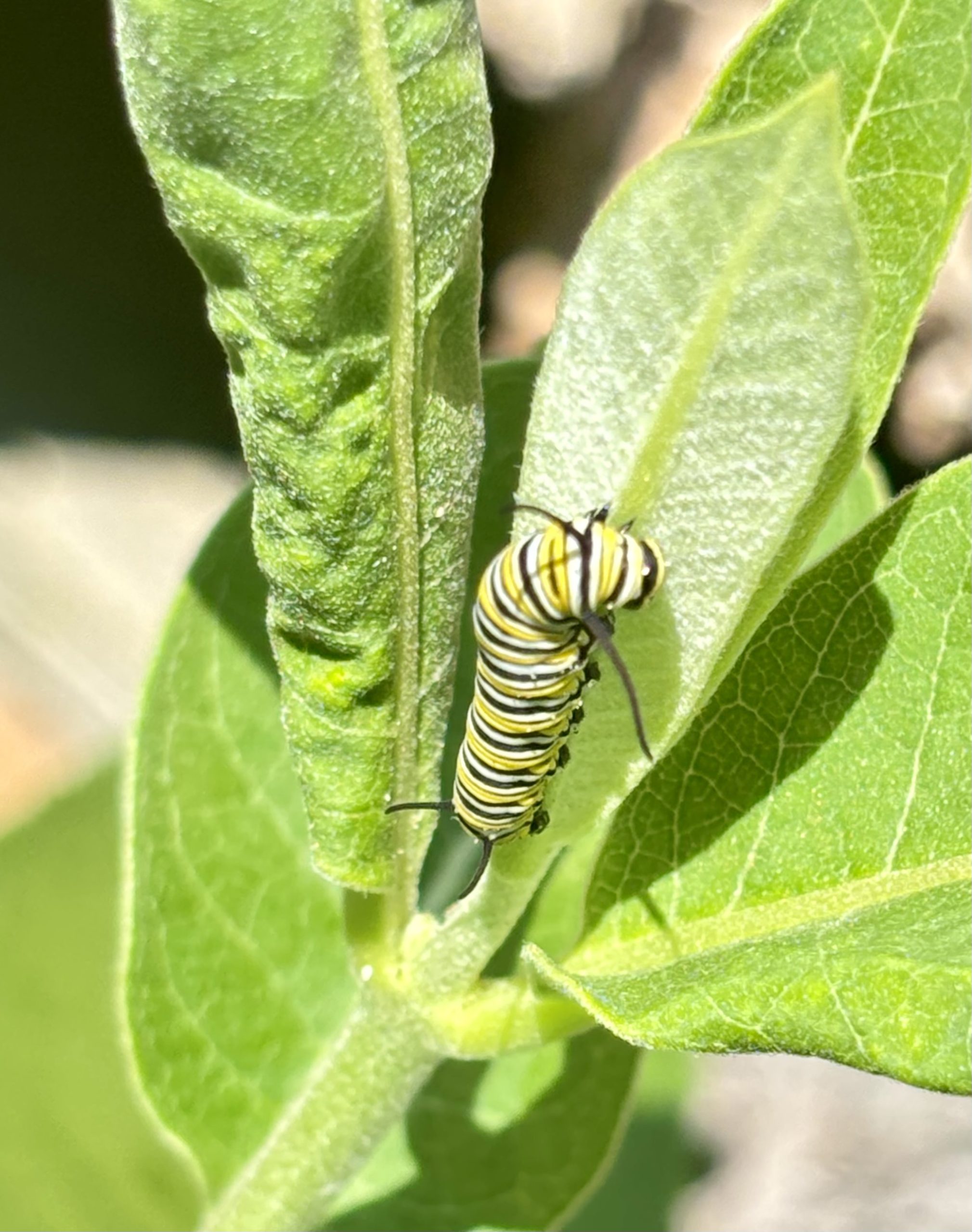
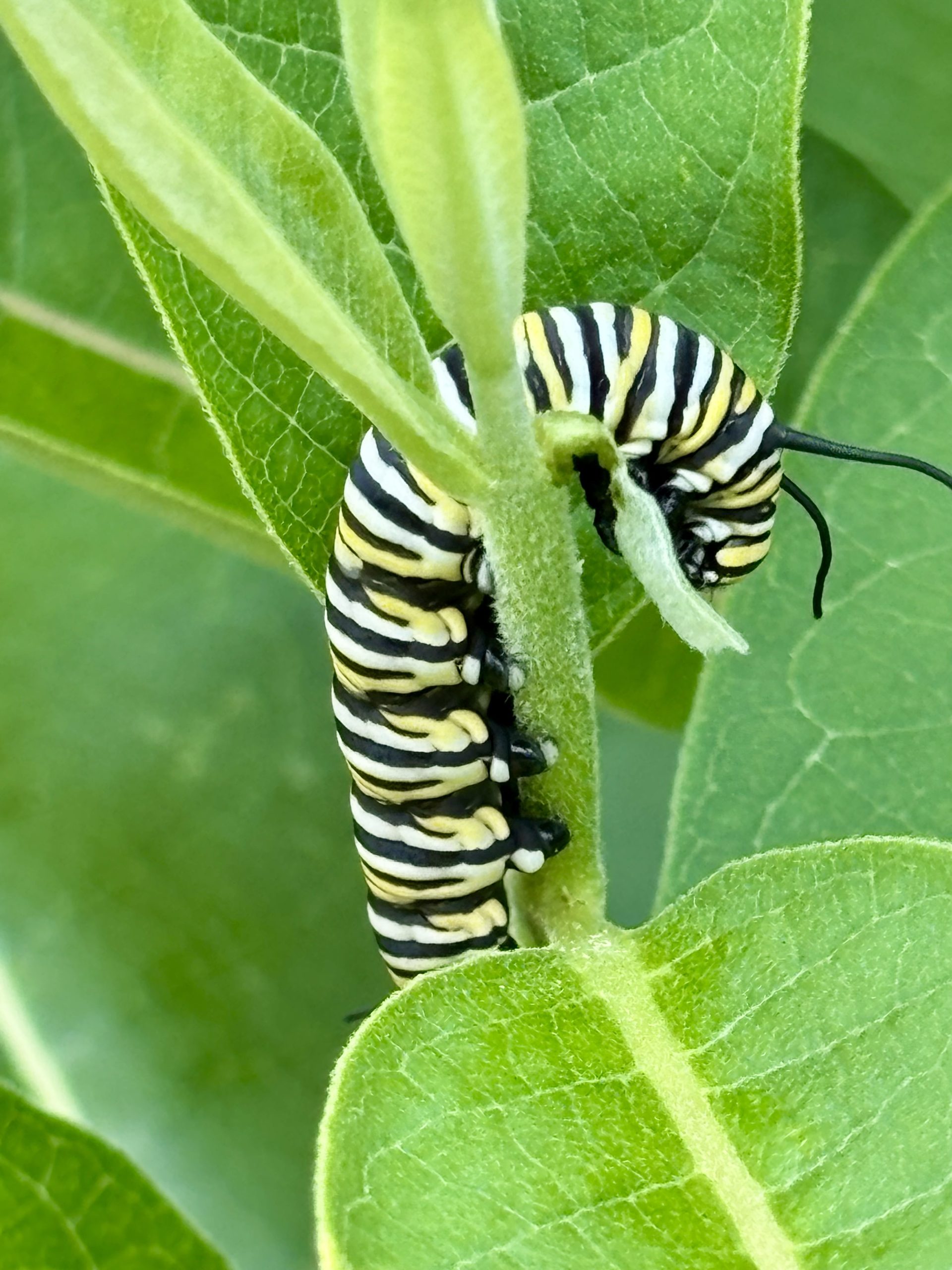


Here’s what we’re doing to help the Monarch butterflies.
- Monarchs arrive in Ontario in late May or early June after a 2-month, 3000+ km journey from their overwintering home in Mexico. Although they’ll have feasted on wildflower nectar and pollen during their journey north, they’ll be happy to find several spring-flowering plants in bloom in our PG.
- They’ll likely be thirsty too and may pause at our Butterfly Puddler to quench their thirst in the shallow dish of sandy water, enriched with a bit of compost and loaded with rocks and pebbles for them to land on. Male butterflies gather nutrients from the mud, which they transfer to females during mating.
- After mating, a female Monarch’s thoughts turn to finding a safe place for her offspring. Maybe she’ll come across our Butterfly Weed and Swamp Milkweed and lay her eggs on the underside of their leaves. Did you know that females can lay over 400 eggs?
- In about 4 days, when the caterpillars emerge from their eggs, they’ll dine exclusively on their milkweed host’s leaves. They consume a large quantity of them as they grow and develop.
- In 10-14 days, when the caterpillars are fully grown, they’ll crawl away from their milkweed hosts to find a safe, quiet spot to pupate, maybe under the BugTel’s roof? If you’re lucky enough to find one, please do not disturb it!
- Emerging from their chrysalis about 8-14 days later is a new generation of Monarch butterflies, which will be looking for pollen and nectar from common favourites like our Liatris, Purple Coneflower, Wild Bergamot and Black-Eyed Susan
- This cycle repeats 3 more times over the summer, which is why one of the reasons why we have flowers blooming in our PG at various intervals. The first 3 generations have a relatively short lifespan of 2 to 6 weeks, however the migratory generation born in August live for up to 8 months
- In late August or September, the migratory generation of monarchs is preparing to leave. They’ll create fat reserves for their long journey south by visiting our late-blooming flowers like our Asters, Anise Hyssop and Goldenrod.
- Safe travels to the Monarchs, see you in the spring!
Photo Gallery